Effective Obturation Techniques for Successful Root Canal Treatments
Root canal treatment is a routine yet crucial procedure in dental practice, involving several precise steps to ensure long-term success. Among these steps, obturation stands out as one of the most important because properly sealing the root canal prevents reinfection and promotes healing over the years. While many dentists rely on the familiar and straightforward cold lateral compaction method, there are several other obturation techniques worth knowing—and practicing—to achieve better clinical outcomes. In this blog, we’ll explore these different methods, helping you expand your knowledge and refine your skills for more predictable and successful root canal treatments.
What is Obturation?
The American Association of Endodontists defines obturation as the method used to fill and seal a cleaned and shaped root canal using a root canal sealer and core filling material.
The main purpose of obturation is to eliminate all portals of entry between the periodontium and the root canal. The better the seal, the better the prognosis of the root canal.
Read Also: Manual vs Rotary Endodontics: A Comprehensive Comparison for Successful Root Canal Treatment
Different Types of Obturation Materials:
- Silver Cones: Endodontic practice no longer recommends silver cones because they corrode upon contact with saliva or periradicular fluids, producing highly toxic by-products.
- Gutta-Percha: It is the most commonly used solid core filling material in endodontics. It is a trans-isomer of polyisoprene and exists in alpha and beta crystalline forms. The material is solid in the beta phase and does not shrink. On heating, the beta phase changes into the alpha phase, which is tacky and flowable under pressure. Because gutta-percha has poor sealing properties regardless of the technique used, clinicians must combine it with a root canal cement or sealer to ensure proper filling and sealing of the root canal.
- Resilon: This recently introduced high-performance polyurethane offers an alternative to gutta-percha and supports lateral compaction, warm vertical compaction, and thermoplastic injection techniques; however, clinicians need long-term clinical trials before they can fully replace gutta-percha with this material.
- MTA: Mineral trioxide aggregate (MTA) serves as a canal obturation material due to its superior physicochemical and bioactive properties. However, retreatment of canals filled with MTA is quite difficult. Also, there is a potential for discoloration when used in the anterior esthetic zone.
Different Techniques of Obturations:
1. Cold Lateral Compaction Obturation Technique:
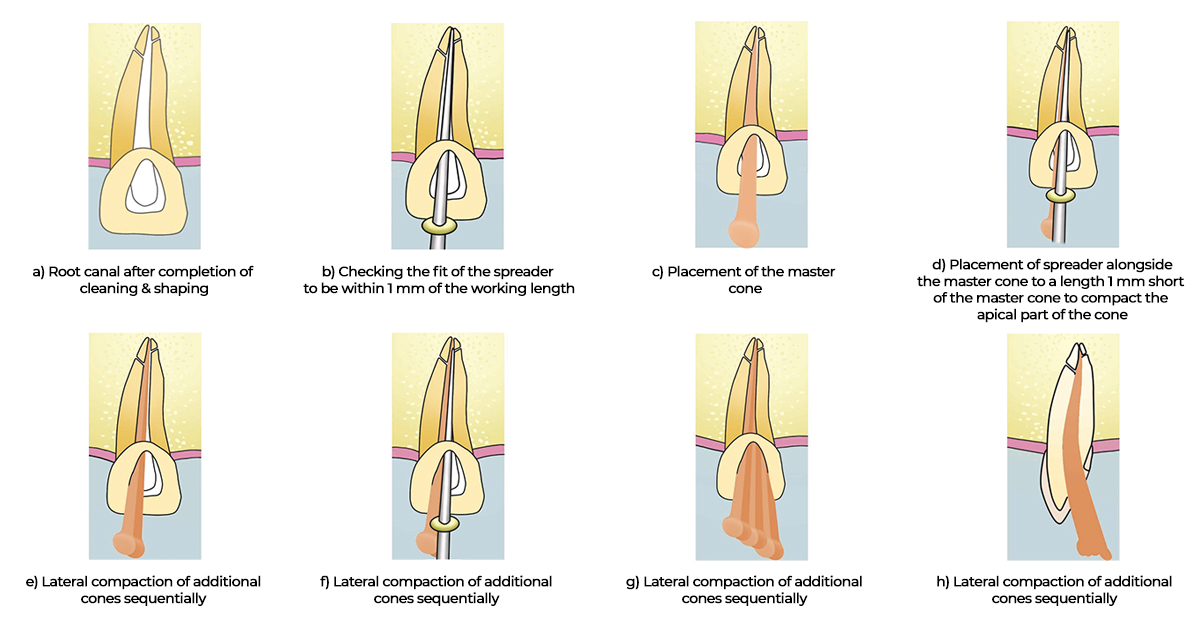
It is the most commonly used technique by dentists all over the world. However, it is still not the best technique to achieve a three-dimensional seal. The cold lateral technique basically involves the selection of the size of the spreader based on the width of the prepared canal and the lateral fit of the primary cone. The fit of the primary cone is verified by radiograph. The fit of the spreader should be within 1 mm of the working length. This is followed by the placement of the master cone. The spreader is then again placed alongside the master cone to a length 1 mm short of the master cone to compact the apical part of the cone.
Similarly, clinicians perform lateral compaction of the additional cones sequentially until they can no longer reinsert the spreader, which indicates complete lateral compaction of the root canal. During obturation, clinicians must take several radiographs to verify the accuracy of the procedure, and they should place the post-obturation restoration only after thorough confirmation.
Limitations:
- Presence of voids in the filling
- Increased sealer: GP ratio when compared with thermoplasticized techniques
- Not as effective in sealing intracanal defects and lateral canals when compared to warm compaction techniques
2. Warm Compaction (warm gutta-percha) Obturation Technique:
(a) Warm Vertical Compaction–
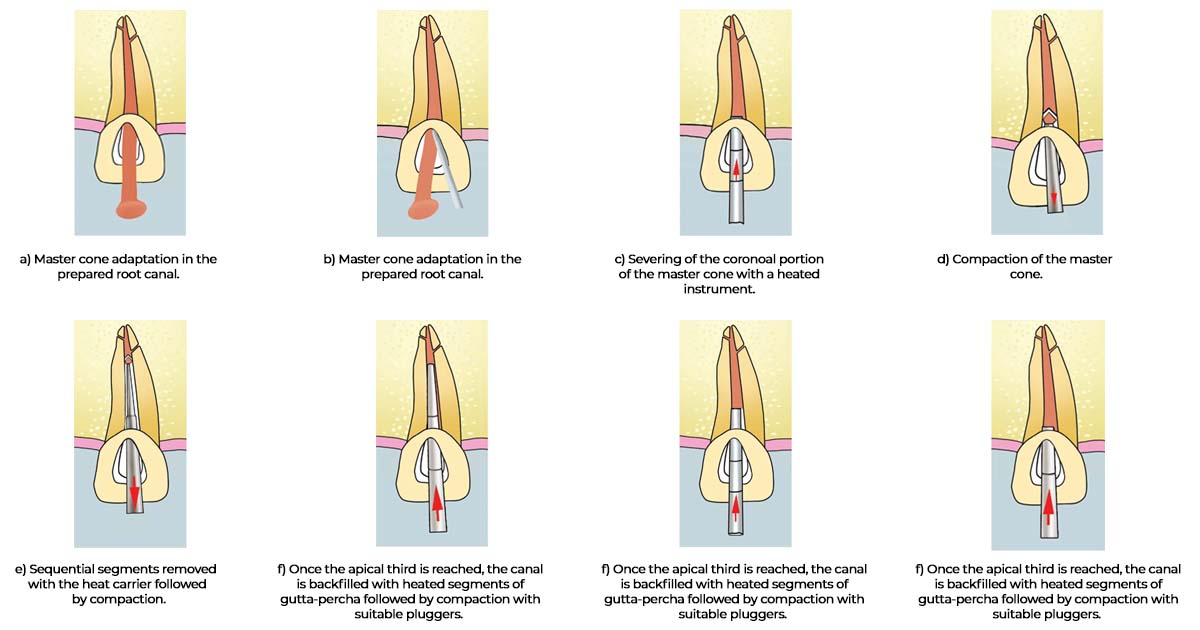
The main principle of this technique is to fill the root canals as well as the lateral and accessory canals with heat-softened gutta-percha. A heated plugger applies vertical pressure, causing the gutta-percha to flow and fill the entire canal lumen. The diagram below illustrates the step-by-step procedure.
Limitations:
- Time-consuming procedure
- Risk of vertical root fracture resulting from undue force
- Possibility of overfilling with gutta-percha or sealer, which cannot be retrieved from the periradicular tissues
(b) Warm Lateral Compaction -
The warm lateral compaction involves the placement of the master cone and lateral compaction using heat carriers, thus providing the advantages of the thermoplasticized technique as well as length control during obturation. The device is placed beside the master cone and activated. An unheated spreader is then inserted into the space previously occupied by the heat carrier, and accessory cones are placed. This process is repeated until the canal is completely filled.
Top Recommendations: Woodpecker Obturation Pen System , SuperEndo Dental Buchanan Hand Pluggers
3. Continuous Wave Compaction Obturation Technique:
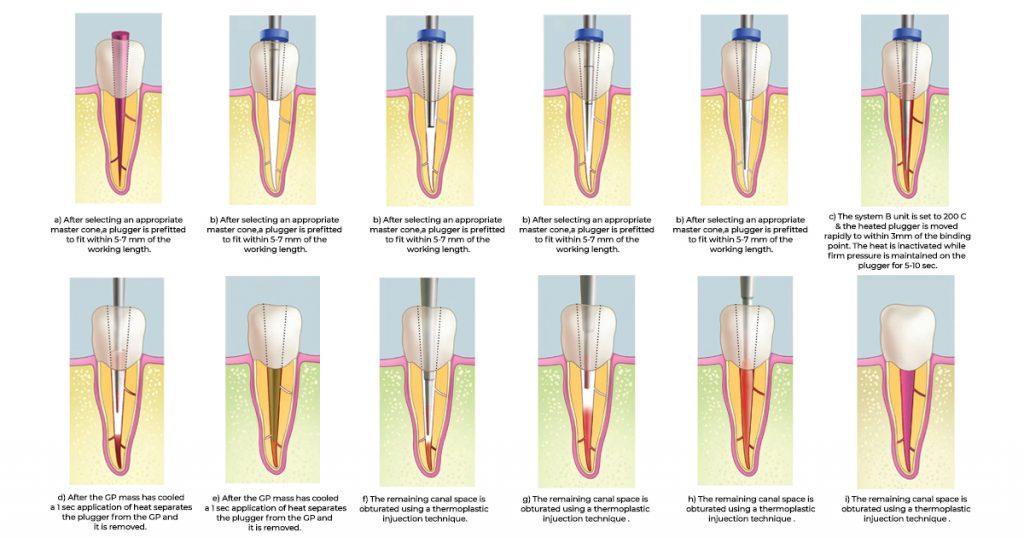
Introduced by Buchanan, this technique is a variation of warm vertical compaction. It requires the use of gutta-percha cones and pluggers that mimic the tapered preparation, thereby permitting the application of greater hydraulic force during warm compaction. It uses tapered nickel-titanium systems to prepare the canal. Pluggers are selected in accordance with the shaping instruments used. Tapered pluggers with sizes #.06, #.08, #.10, and #.12 are used, with tip diameters similar to the tapered gutta-percha points. The procedure is carried out with a heat carrier system.
The step-by-step procedure can be appreciated in the diagram below.
Top Recommendation: Endoking ObturaPro Obturation System
4. Thermoplasticized Gutta-Percha Injection Obturation Technique:
This technique involves the use of a pressure apparatus, more commonly called an Obturation Gun, consisting of an insulated electrically heated syringe barrel and a selection of needles ranging from 18 to 25 gauge size. After preparing the canal as usual, apply sealer once the canal is dry. The system heats the gutta-percha pellets, and a properly sized needle is positioned 3–5 mm short of the working length. Gradually inject gutta-percha by squeezing the gun’s trigger while slowly withdrawing the needle as the canal fills apically. Compact the gutta-percha with appropriately sized pluggers, and fill the remainder of the canal in one or two additional increments using the same method.
In the injection method, prepare the canal with apical restriction and flare the canal body toward the access opening to control gutta-percha flow.
Limitations:
- Lack of precision apically can often lead to the flow of gutta-percha.
- The interface seal between the gutta-percha and the canal wall is weak, and voids occur in the final set filling.
Top Recommendation: Woodpecker Obturation Gun
5. Carrier-based Gutta-Percha Obturation Technique:
(a) Thermafil Thermoplasticized -
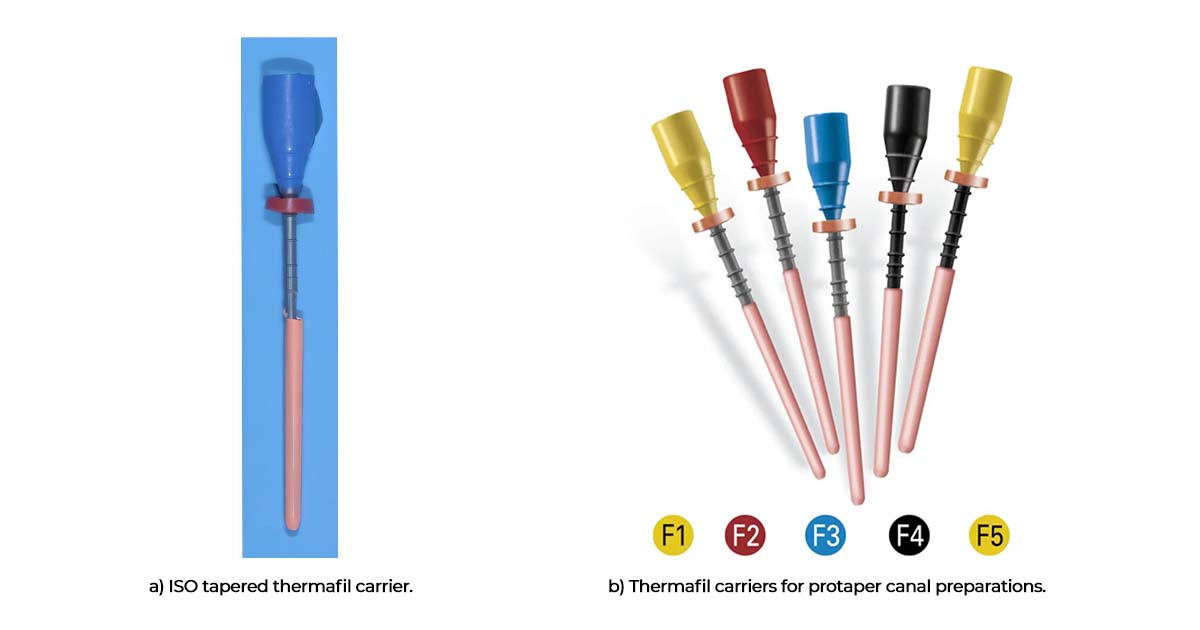
The Thermafil is a carrier-based gutta-percha obturation system comprising a plastic core carrier coated with alpha phase gutta-percha. These Thermafils are available in ISO standardized sizes as well as tapered sizes for canals prepared with NiTi tapered instruments.
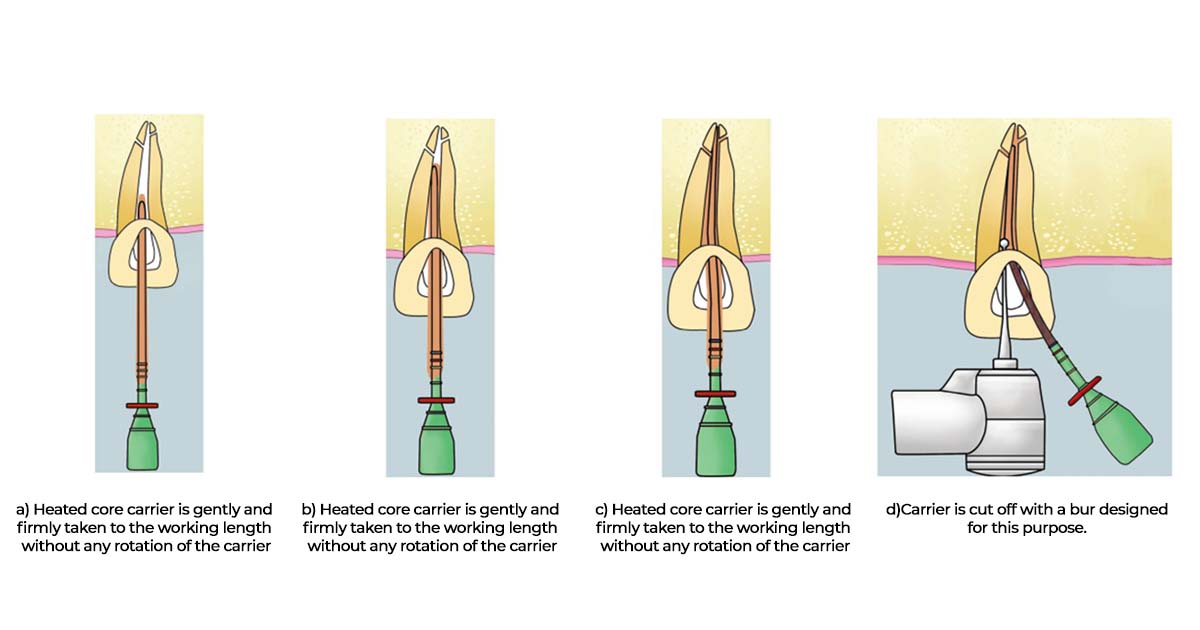
After preparing the canal, verify its size with a Thermafil verifier instrument to select the appropriately sized obturator. Dry the canal and apply sealer as in any other technique. Adjust the silicon stopper on the carrier to the working length, then load the carrier into the Thermaprep Plus Oven for approximately 10 seconds. Insert the carrier into the canal, advancing it to the working length with firm, uniform apical pressure without rotating. Verify the carrier’s position radiographically, then allow the gutta-percha to cool for 2–4 minutes before resecting the carrier at the level of the canal orifice.
(b) SimpliFill Sectional Obturation -
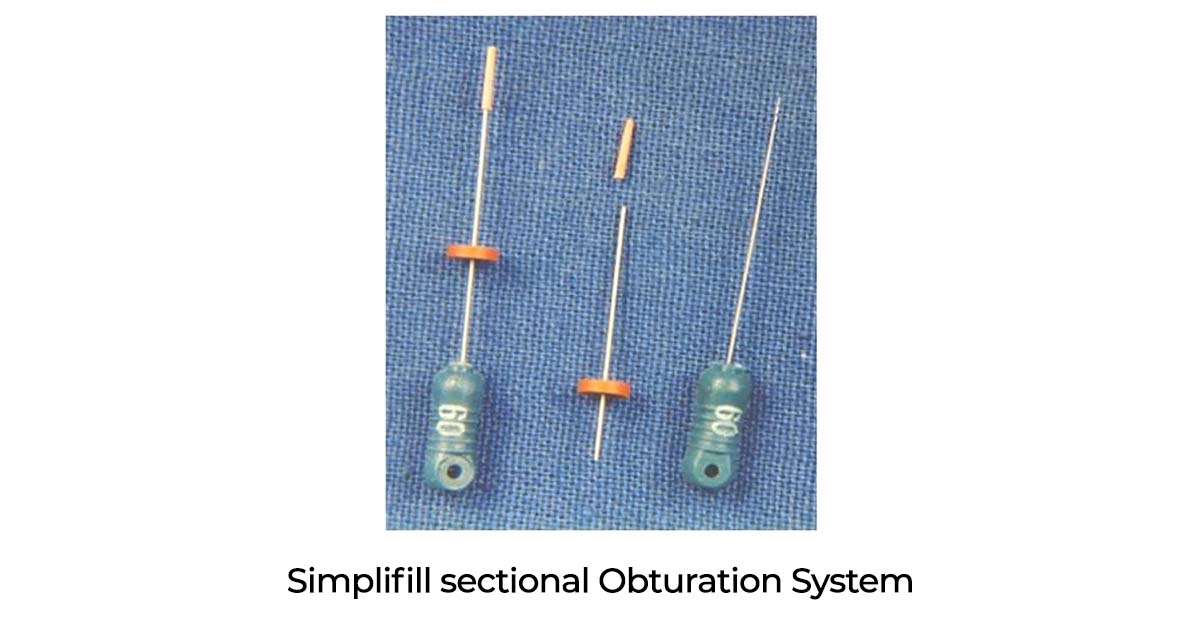
It is a carrier-based sectional gutta-percha obturation system used in conjunction with light-speed rotary instruments. The SimpliFill carrier has an apical 5 mm plug of gutta-percha, which performs cold sectional obturation of the root canal. After drying the canal and applying sealer, select a carrier that matches the master apical file and insert it to the working length. Rotate the carrier handle quickly three to four times counterclockwise to disengage the apical plug of gutta-percha. Fill the remaining coronal space using lateral compaction or thermoplasticized gutta-percha techniques.
6. McSpadden Thermomechanical Compaction Obturation Technique:
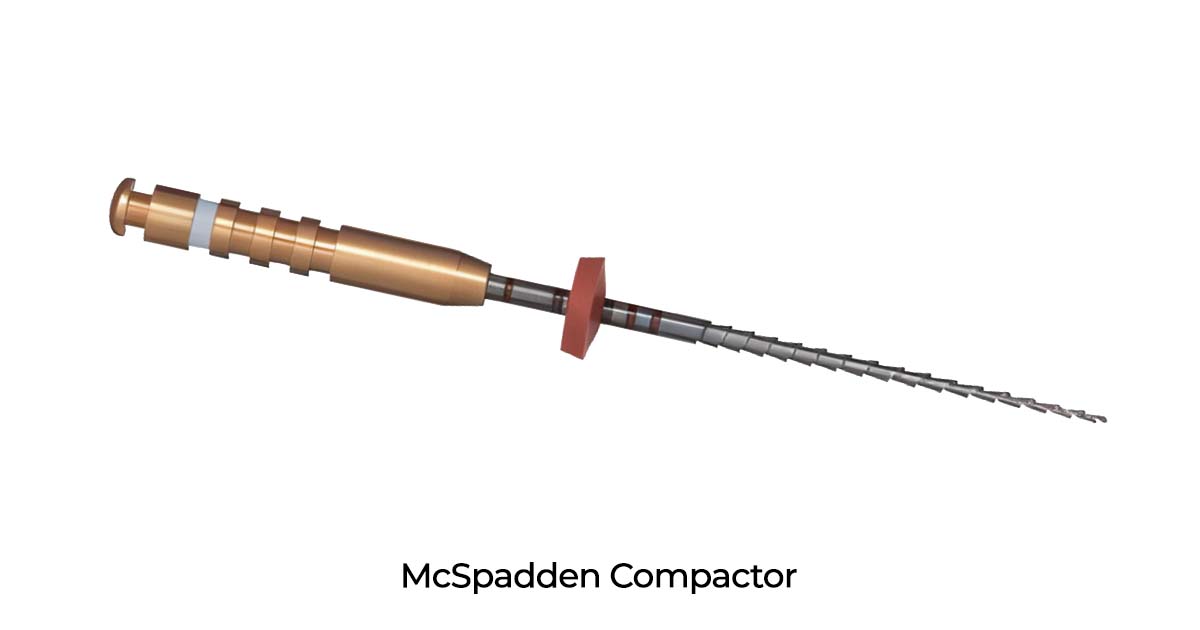
Introduced by McSpadden, this technique uses heat to decrease the viscosity of gutta-percha and increase its plasticity. Rotate a compacting instrument in a slow-speed contra-angle handpiece at 8,000–10,000 RPM alongside the gutta-percha cones inside the root canal to generate heat. The stop on the compactor blade helps guide the rotating tip of the blade to within 1.5 mm of the root apex, helping prevent gutta-percha from flowing beyond the apex. The compactor, whose spiraled 90° flutes are similar to the flutes on a Hedstroem file but in reverse, forces the softened gutta-percha apically and laterally.
Disadvantages:
- Cannot be used in narrow canals
- Compactor blades often break in the canal
- Frequent overfilling of the canal
- Shrinkage of the cooled or set filling
7. Chemically Plasticized Gutta-Percha Obturation Technique:
This technique is no longer recommended. It plasticizes gutta-percha using chemical solvents such as chloroform, eucalyptol, or xylol. The disadvantage of using a chemical-solvent filling material is its inability to control overfilling, often leading to periapical tissue reaction and shrinkage of the filling after setting, resulting in a poor apical and lateral seal.
8. Custom Cone Obturation Technique:
It is a chair-side procedure wherein the dentist customizes the cone for adequate tug-back in a canal. The technique involves softening the gutta-percha with one or more accessory cones using heat or rolling between two glass slabs to achieve a single master cone of the required size. Another method is softening the master gutta-percha with chloroform, eucalyptol, or halothane for a few seconds and gently placing it to the working length with a locking plier. Remove the softened gutta-percha to reveal the canal’s impression, and repeat the process until it fits snugly.
Conclusion:
In summary, successful root canal treatment relies heavily on effective obturation, which involves sealing the canal to prevent reinfection. While cold lateral compaction remains widely used, exploring other techniques such as warm compaction, continuous wave, thermoplasticized injection, carrier-based systems, and thermomechanical compaction can significantly improve sealing quality and clinical outcomes. Each method has its advantages and limitations, making it essential for clinicians to understand and select the best approach based on individual case requirements. Embracing these advanced techniques not only enhances treatment success but also helps you stay at the forefront of endodontic practice. For all your dental materials and equipment needs to implement these methods efficiently, explore Dentalkart—your reliable partner in dental innovation and supplies.
Dr. Vandana Tanwar
Author
Related Articles

Endodontic Irrigation Activation Systems: Sonic vs Ultrasonic vs Manual
Introduction Successful root canal treatment is not achieved by instrumentation alone. While modern rotary and reciprocating systems shape the canal

Fiber vs. Metal Posts: Guide to Choosing the Right Post & Core
In the era of biomimetic dentistry, the choice of post and core materials remains a point of contention for many clinicians. While the shift toward adhesive pr

The Rise of Bio-ceramic Sealers: What Dentists Must Know in 2026
Introduction In everyday endodontic practice, success depends not only on shaping and cleaning but also on how well the root canal system is sealed. For man