
Impression Material Selection: VPS, Polyether, C. Silicone & Alginate
Why “Selection” Matters More Than “Material”
- A Biologic and Mechanical Record: An impression is not a static mold; it is a clinical record sensitive to tissue pressure, moisture, and subsequent laboratory processing.
- Indication-Driven Failure: Most “technique failures” are actually “selection failures”-using a high-stability material where high flexibility was needed, or a hydrophobic material in a high-moisture field.
- The Comparative Anchors: Success is determined by balancing three variables: Accuracy (detail), Stability (time), and Clinical Tolerance (moisture/undercuts).
Determinants of Impression Material Selection in Clinical Practice
1. Clinical Determinants Driving Material Choice

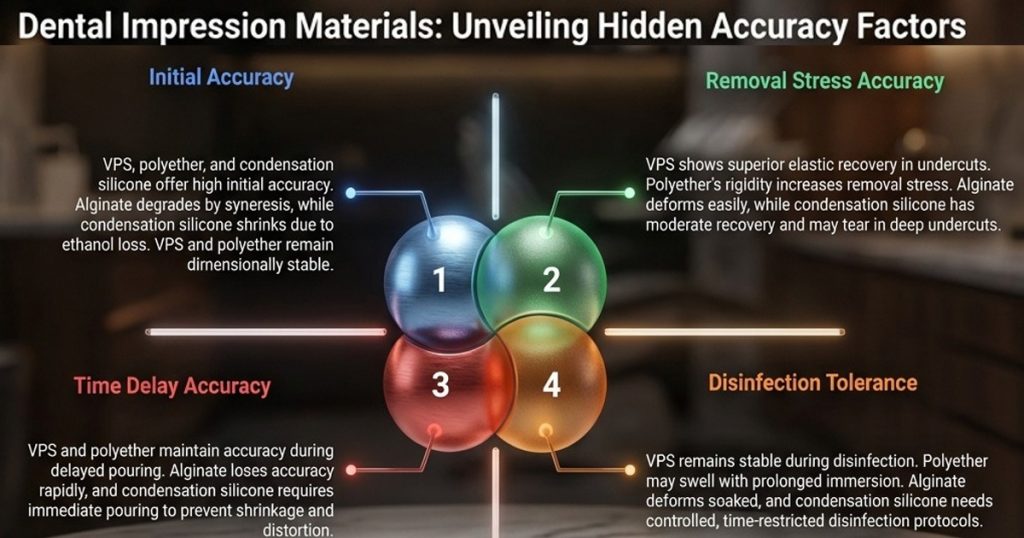
2. Dimensional Accuracy: Static vs. Dynamic Accuracy
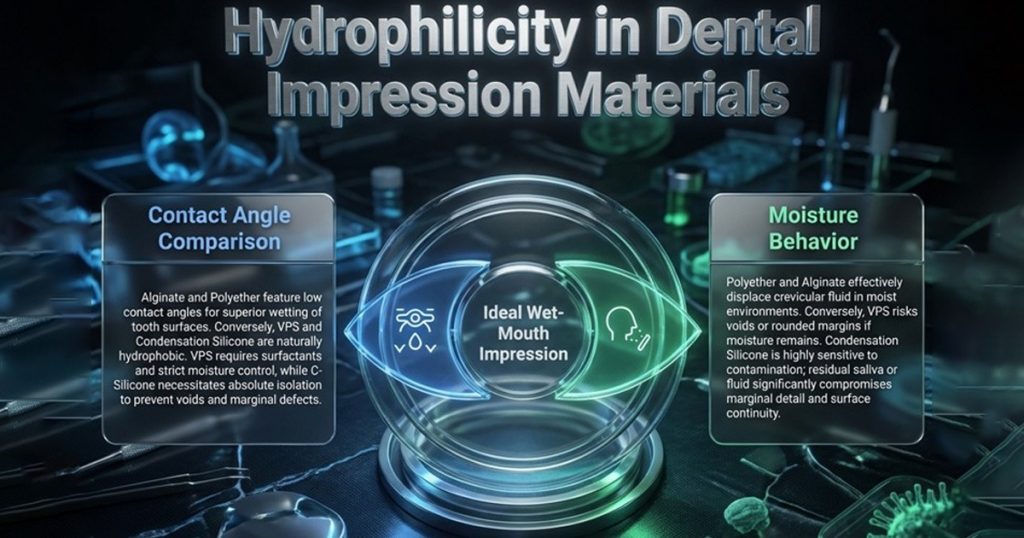
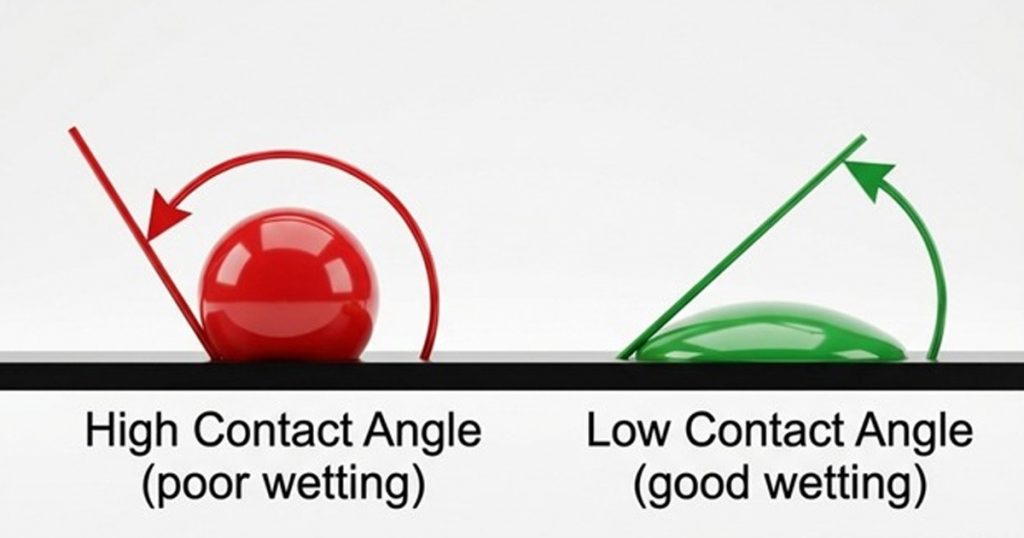
3. Hydrophilicity: What Actually Works in a Wet Mouth
4. Elastic Recovery & Strain-in-Compression: Removal Reality

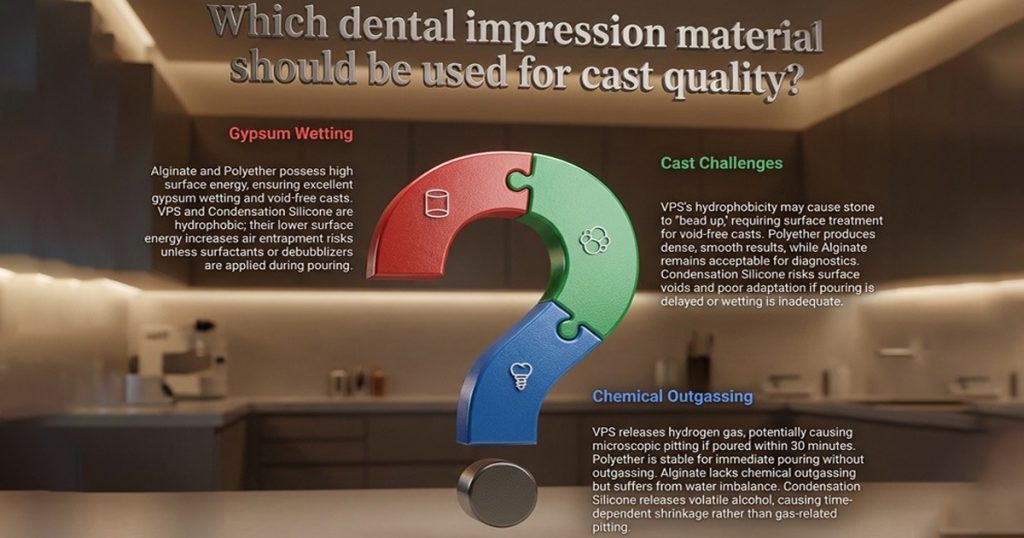
5. Surface Detail Reproduction vs. Cast Quality
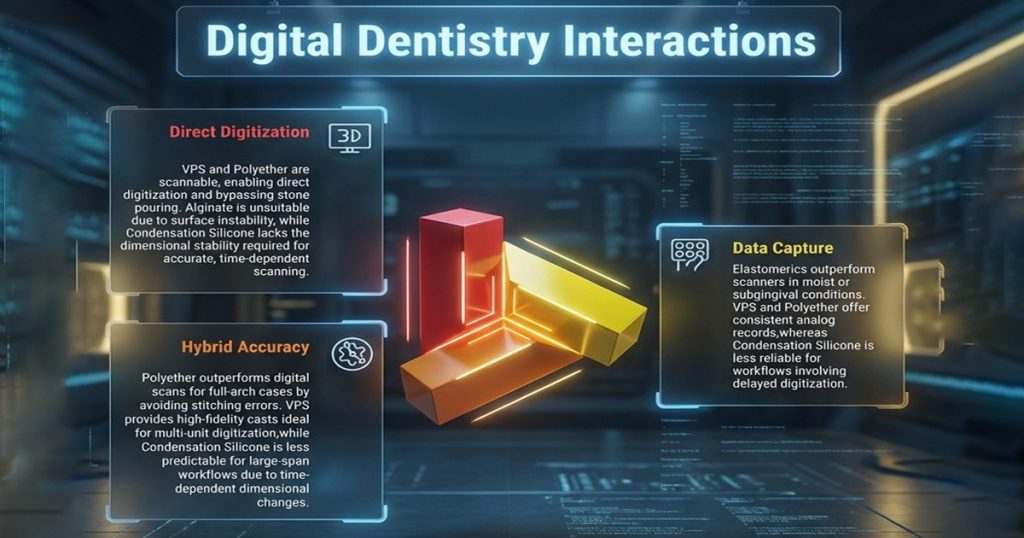
6. Interaction With Digital Dentistry
Alginate Repositioned: Where It Still Clinically Wins
- Diagnostic Superiority: For study models and initial data collection, Alginate is more cost-effective and faster than elastomers.
- Soft Tissue Capture: In removable prosthodontics, the low viscosity of Alginate captures mucostatic tissues more accurately than the heavier-body elastomers.
- Digital Integration: Alginate remains an efficient tool for “scan-the-cast” workflows in high-volume orthodontic practices.
A Clinician’s Selection Matrix (Decision Tool)
| Clinical Scenario | Alginate | Condensation Silicone | Vinyl Polysiloxane (VPS) | Polyether (PE) |
| Moisture Tolerance | Excellent | Low | Low/Moderate | High |
| Elastic Recovery | Low | High | Excellent | Moderate |
| Rigidity (Stiffness) | Low | Low/Moderate | Moderate | High |
| Dimensional Stability | Low (Minutes) | Low (Immediate Pour) | High (Weeks) | High (Weeks) |
| Single Unit Crown | Contraindicated | Recommended | Recommended | Recommended |
| Multi-Unit Implant | Contraindicated | Not Recommended | Recommended | Recommended |
| Mobile Teeth | Recommended | Recommended | Recommended | Contraindicated |
Closing Perspective: From Material Knowledge to Clinical Judgment
Choosing an impression material should be a thoughtful decision, not just a routine step. By aligning a material’s properties with the specific needs of the case—using VPS for dimensional stability, polyether for hydrophilicity, condensation silicone for elasticity, or alginate impression material for speed—the clinician can achieve a precise and reliable impression. Adopting a comparative selection approach helps reduce prosthetic errors and minimizes the need for clinical retakes.
FAQs
Many clinical inaccuracies arise from choosing the wrong material rather than poor technique. Each material responds differently to moisture, undercuts, tissue pressure, and time delays, directly affecting the final prosthetic outcome.
Vinyl polysiloxane (VPS) provides an excellent balance of accuracy, elastic recovery, and dimensional stability, making it suitable for most fixed prosthodontic and implant cases when moisture control is achievable.
Polyether is preferred in situations with limited moisture control or subgingival margins due to its superior hydrophilicity, but it should be avoided in deep undercuts or mobile teeth because of its rigidity.
VPS and polyether maintain accuracy even with delayed pouring, whereas alginate and condensation silicone undergo rapid dimensional changes and must be poured immediately to avoid distortion.


No Comment