
Dental Trauma: Clinical Guide to Ellis Classification & Management
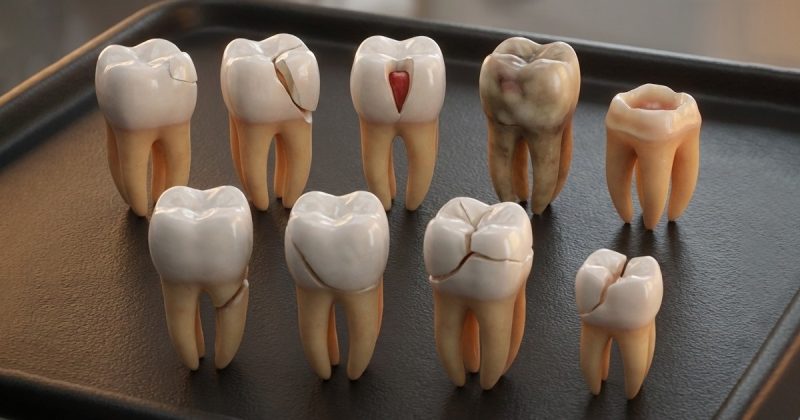
Dental trauma can happen at any time, whether from an accident, fall, or sports injury, and it affect the teeth but also the supporting tissues like gums, jawbone, and surrounding soft tissues. Whether you face a minor chip or a serious tooth fracture, understanding how dental trauma is classified and managed is crucial for a faster recovery.
Dental professionals widely use the Ellis Classification System to diagnose the severity of dental injuries and determine the best treatment. This blog guides you through the Ellis classifications, explains how to manage them, details the treatment for tooth avulsion (when a tooth is completely knocked out of its socket), and highlights potential complications that can arise if you do not treat the trauma promptly.
What is the Ellis Classification System?
The Ellis Classification system categorizes dental trauma into nine classes. These classes help dentists analyse the extent of the injury and determine the best course of treatment. Each class is based on the severity of the injury, from minor enamel fractures to more complex pulp and root injuries.
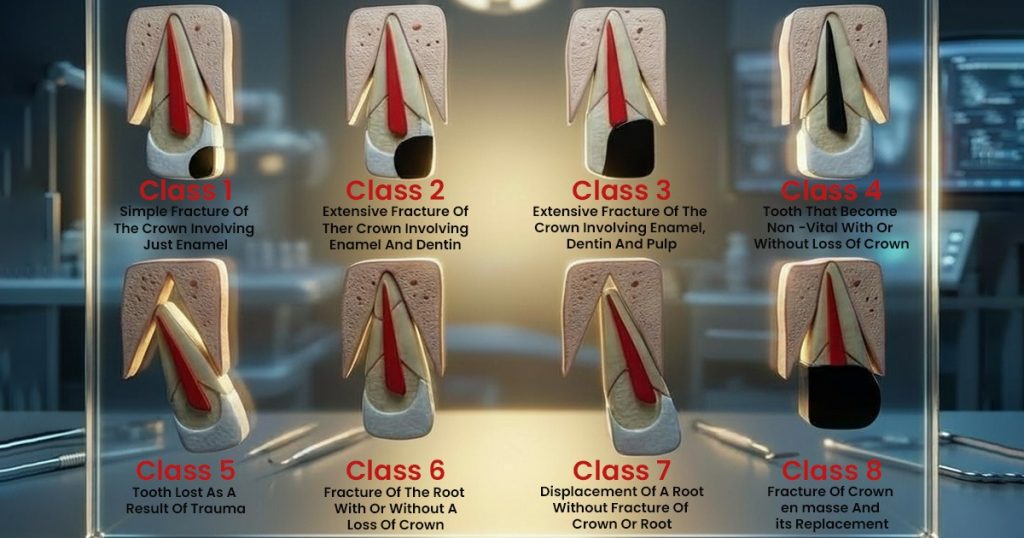
Ellis Classification Table (All 9 Classes)
| Class | Type of Injury | Description | Treatment |
|---|---|---|---|
| Class I | Enamel Fracture | The enamel is cracked or chipped, but the deeper layers (dentin and pulp) remain unaffected. | Smooth the edges; cosmetic bonding may be used. |
| Class II | Enamel-Dentin Fracture | The enamel and dentin are fractured, exposing the tooth’s inner layer, but the pulp remains intact. | Protect exposed dentin with bonding; may need a crown. |
| Class III | Enamel-Dentin-Pulp Fracture | A severe fracture involving enamel, dentin, and pulp, exposing the nerve, causing pain. | Root canal therapy, followed by a crown or restoration. |
| Class IV | Non-vital traumatized tooth | Discoloration, loss of vitality; crown may be intact or fractured | – Pulp vitality tests and radiographs – Root canal treatment for permanent teeth – Internal bleaching or full-coverage restoration if discolored |
| Class V | Avulsion | Complete displacement of tooth from socket | – Immediate replantation if possible – Store tooth in milk/saline if delayed – Flexible splinting (7-14 days) – RCT after stabilization (permanent teeth) |
| Class VI | Root fracture | Pain on biting, mobility; fracture may be apical, middle, or cervical | – Radiographic confirmation (multiple angulations) – Splinting for middle/apical fractures – Extraction for unfavorable cervical fractures |
| Class VII | Luxation injury | Tooth displaced without crown/root fracture | – Reposition tooth gently – Flexible splinting (1-2 weeks) – Monitor pulp vitality regularly |
| Class VIII | Crown fracture en masse | Entire crown fractured and separated | – Retrieve fractured segment if available – Endodontic treatment if pulp involved – Post-core and crown restoration |
| Class IX | Trauma to primary dentition | Injury to deciduous teeth | – Conservative management preferred dentition – Avoid replantation in avulsion – Monitor developing permanent tooth bud |
Avulsion (Complete Tooth Displacement)

Tooth avulsion is one of the most severe types of dental trauma. Avulsion occurs when a tooth is completely knocked out of its socket. It can result from accidents, sports injuries, or other forms of physical trauma. Immediate treatment is important in increasing the chances of saving the tooth.
1. What to Do if a Tooth is Taken Out (Avulsion):

- Find the tooth and hold it by the crown (the top part, not the root). Avoid touching the root as this can damage the cells needed for re-implantation.
- Rinse the tooth gently under clean water or saline if it’s dirty. Avoid scrubbing or using soap.
- Reimplant the tooth immediately into the socket, if possible, and ensure it’s facing the correct way. If this isn’t possible, place the tooth in milk, saline solution, or the patient’s saliva to keep it moist.
- See a dentist immediately—the sooner you re-implant the tooth, the higher your chances of saving it. Ideally, this should happen within 30 minutes to 1 hour.
2. Treatment by the Dentist:
- If reimplantation is successful, the dentist will clean and disinfect the socket.
- The dentist may splint the tooth in place for a few weeks.
- Root canal therapy may be necessary if the pulp (nerve) is damaged.
- If the tooth cannot be re-implanted, the dentist discusses replacement options such as dental implants or bridges.
3. Follow-Up Care:
- After reimplantation, regular follow-up will ensure the tooth is healing correctly, and to check for signs of infection or complications.
General Management of Dental Trauma

Whether the injury falls into any Ellis classification, managing dental trauma effectively involves several important steps:
1. Immediate Care:
- Stop bleeding: Apply a clean cloth or gauze to the affected area to stop any bleeding.
2. Pain Management:
- Use over-the-counter pain relievers like acetaminophen or ibuprofen to manage discomfort.
- Apply a cold compress to reduce swelling.
3. Seek Professional Help:
- You should have even minor fractures evaluated by a dentist. Hidden damage, such as cracks in the root or damage to the pulp, may require more intensive treatment.
4. Follow-Up Care:
- Regular visits are essential for monitoring the healing process, particularly after root fractures or following the re-implantation of teeth.
Recent Advances in Managing Dental Trauma
Modern dentistry has seen many exciting developments in the treatment of dental trauma, which have made recovery quick, less painful, and more effective. Here are some of the latest advancements:
1. Minimally Invasive Techniques:

- The use of lasers in dental procedures allows for more precise treatments with minimal discomfort. Lasers can help remove damaged tissue and perform root canal treatments with less pain and faster healing.
2. Bioactive Materials:
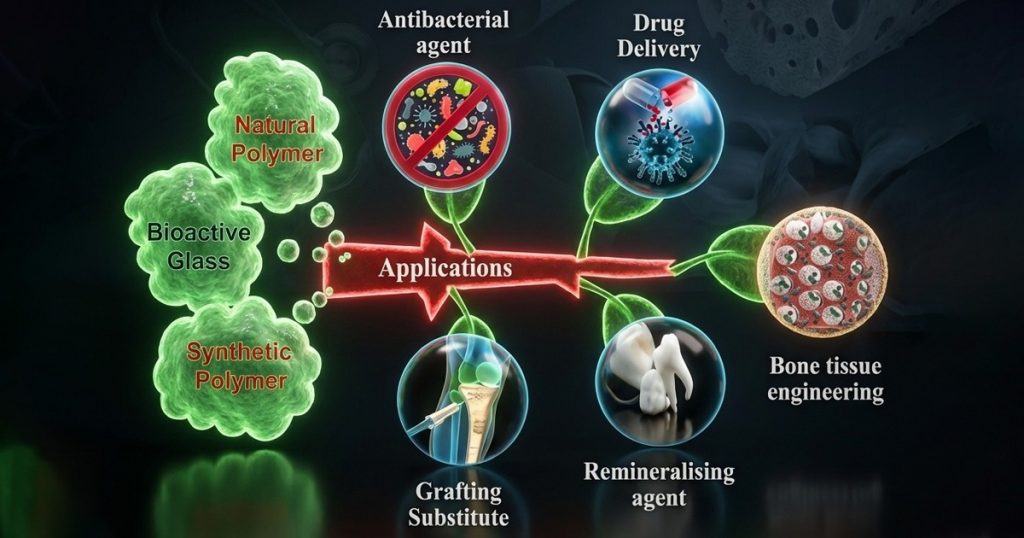
- Dentists now use bioactive glass and other advanced materials in dental treatments to promote natural healing and tooth remineralization, reducing the need for more invasive procedures.
3. 3D Imaging and CAD/CAM Technology:

- 3D imaging and CAD/CAM technology allow dentists to create accurate models of the teeth and bone structures, improving diagnosis and treatment planning for dental trauma. These technologies allow for faster and more precise restorations.
4. Advances in Splinting:
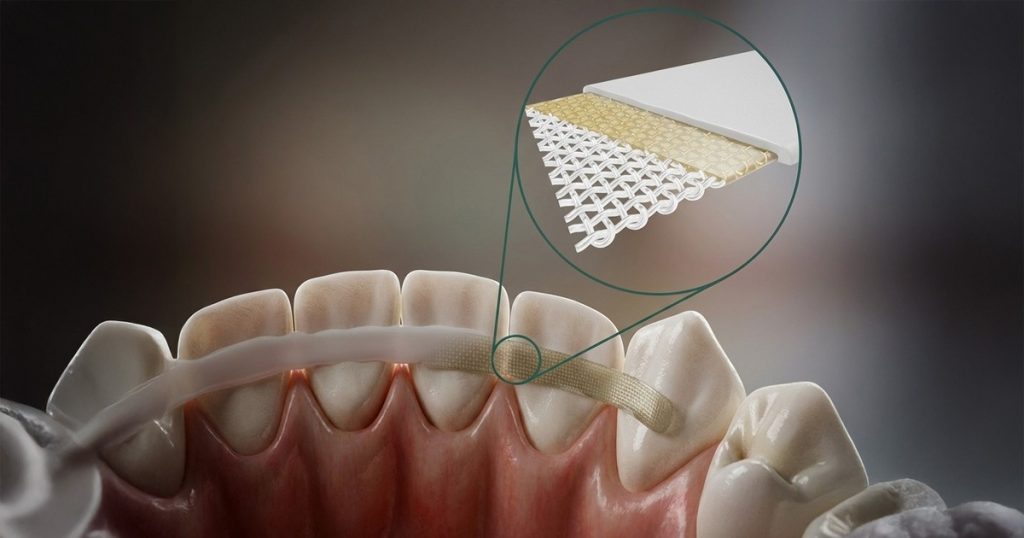
- Newer splinting materials are stronger and more comfortable, helping to stabilize teeth after trauma and reduce discomfort during the healing process.
5. Immediate Implant Placement:

- When dentists cannot save a tooth and must extract it, they increasingly use immediate implant placement. In this approach, the dentist places a dental implant immediately after removing the tooth, thereby eliminating the need for a second surgery later.
Complications from Untreated Dental Trauma
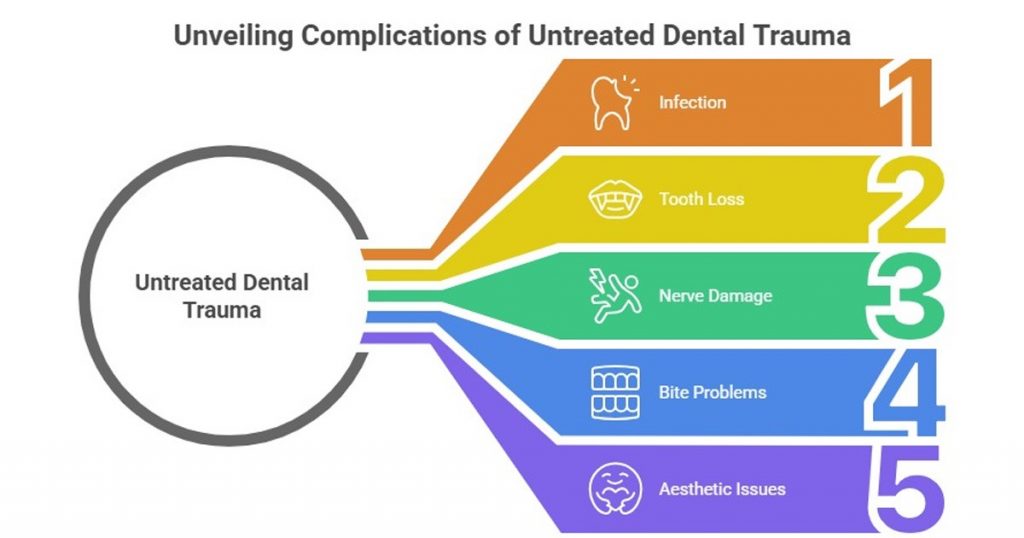
If you leave dental trauma untreated, it can lead to several serious complications:
1. Infection:
- If a tooth fracture exposes the pulp, bacteria can enter and cause infection, leading to abscesses or the need for a root canal treatment.
2. Tooth Loss:
- Severe trauma, especially avulsion, may result in permanent tooth loss if not treated immediately.
3. Nerve Damage:
- Root fractures or deep fractures that reach the pulp can cause nerve damage, leading to pain, infection, or the need for a root canal.
4. Bite Problems:
- Displaced (luxated) or fractured teeth can alter how the teeth fit together, leading to problems with bite alignment and chewing.
5. Aesthetic Issues:
- Fractured teeth, especially in visible areas, can cause long-term aesthetic concerns and, therefore, often require restorations such as crowns, veneers, or bonding.
Conclusion
Although dental trauma can be frightening, taking prompt action and seeking appropriate treatment can effectively manage most dental injuries and, as a result, improve recovery outcomes. The Ellis Classification system helps dental professionals determine the severity of the injury and choose the most appropriate treatment.
From simple enamel fractures to severe avulsion (tooth loss), dental trauma management has greatly improved thanks to new technologies, minimally invasive treatments, and advanced materials. If you experience any dental injury, seek prompt professional care to avoid complications and ensure the best possible outcome for your teeth and smile.
FAQ’s
You should postpone vitality testing for 2–3 weeks after the trauma, as transient pulpal neural shock can produce false negative results.
Dentists recommend flexible splinting for 7–14 days for luxation injuries and up to 2 weeks for avulsed teeth, unless root fractures are present.
No, immediate root canal therapy is not always indicated. Dentists recommend root canal therapy for avulsed permanent teeth with closed apices, and they typically initiate the treatment within 7–10 days after reimplantation.
Leaving an avulsed tooth dry for over 60 minutes reduces periodontal ligament viability and therefore raises the risk of tooth ankylosis and root resorption.
Multiple periapical radiographs at different angulations, along with CBCT when indicated, provide more accurate diagnosis of root fractures.



No Comment