Artificial Intelligence in Dentistry: A Glimpse into the Future
Artificial Intelligence is being a Rockstar in the field of industries. No doubt, dentistry also has its turning story with such revolutions. In every dimension of diagnosis, treatment planning, patient management, and even in the managerial area, artificial intelligence is transforming the face of dental care. This article brings about the journey of the current and potential applications of AI in dentistry, benefits, and how they are shaping the future of oral healthcare.
What is Artificial Intelligence?
Artificial Intelligence refers to the simulation of human intelligence in machines. Artificial Intelligence in Dentistry applies algorithms and data towards dental problems, foretelling outcomes of treatment and improving patient care. The tool is AI driven and analyzes big data, pattern recognition, providing high accuracy, and speed for the decision-making process.
Current Applications of AI in Dentistry
1. Diagnosis and Treatment Planning
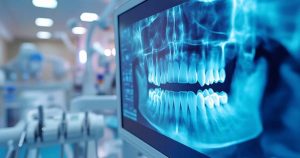
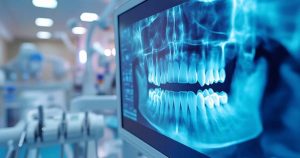
Early diagnosis of dental problems has finally seen the light of day, as AI-driven diagnostic tools can now spot problems such as cavities, gum diseases, or even oral cancer from X-rays, CT scans, and intraoral images.
2. Radiographic Analysis
Algorithms for reading radiographs can identify abnormalities in dental images very accurately. They can point out caries, root fractures, and bone loss much faster than any manual analysis.
Orthodontics: These devices help in creating 3D models for orthodontic treatment and predicting the movement of teeth with very high accuracy and designing clear aligners to a very high precision.
3. Predictive Analytics
AI predicts the course of dental diseases, that is the likelihood of spreading tooth decay, aggravating gum disease, or the appearance of complications during postoperative period. This gives an opportunity to take preventive measures and better orient treatment plans.
4. Personalized Treatment
The dental specialist examines the patient's medical history, genetic data, and lifestyle habits and makes tailored suggestions that match individual patients' requirements.
5. Robotics in Dentistry
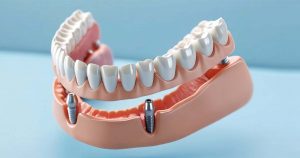
AI-powered robots are used to place implants, and the robot systems help deliver accurate drilling and implant placement with a lesser rate of error; thus, enhancing patient care substantially.
6. Virtual Dental Assistants
AI-based virtual assistants make the communication between patients and dentists easier and not so complicated. For instance,
- Scheduling of an appointment
- They can answer many questions that the patient may have
- Remind patients about follow-up visits
Thus, it reduces the administrative workload on dental staff and enhances the patient experience
7. Education and Training
AI is also training the next generation of dentists. Using AI-powered virtual simulations, the students can conduct procedures in a risk-free setting and enhance their skills and confidence levels before handling real patients.
Advantages of AI in Dentistry
1. Enhanced Accuracy
AI rules out all the possibilities of mistakes in diagnosing or formulating treatment plans in alginate impressions as well. it offers correct dental professionals with information, and hence clinical decisions are enhanced.
2. Time Efficiency
Tasks that used to take hours to complete, such as X-ray analysis and designing dental prosthetics, will be completed in minutes by AI. This way, dentists can care more for patients.
3. Value for Money Ends
AI saves dentists and patients money since the processes are automated and repetition of treatments caused by errors is minimized.
4. Better Patient Experience
AI decreases the waiting times since it eliminates the process of appointment scheduling. AI also provides special care, which makes dental visitation more time-efficient. The patients are highly informed and relaxed about their treatments.
5. Detection of Advanced Diseases
AI detects flaws that are missed during conventional checks. Oral cancer or periodontal disease may be treated if it is detected early.
While AI has many benefits, its challenges are :
1. Very High Initial Costs
AI-based technologies are costly to implement. Small dental clinics cannot afford to invest in sophisticated AI tools without some form of financial support.
2. Data Privacy Issues
Patient information is the other primary source of data that AI uses in the analysis. As such, most dentists and regulatory agents treat the security and privacy of the data as of great importance.
3. Lack of Information
Most dentists are not aware of how AI will improve their work. There is a need for proper training and education on the application of AI in order for its use to become widespread.
4. Dependence on the Technology
Excessive dependency on AI will make dental professionals less critical thinkers and less dexterous. A balance between human expertise and AI support is needed.
The Future of AI in Dentistry
AI is going to bring much innovation in dentistry in the near future. Here is a glimpse of what the future might look like:
1. AI-Powered Smart Clinics
Smart clinics with AI facilities will upgrade the workflow process during the check-in process and after treatment. In this context, AI would schedule an appointment, track the progress of the patient, and even offer preventive care techniques.
2. AI in Preventive Dentistry
AI, by the prediction of likely dental issues based on genetic makeup and lifestyle along with oral hygiene can come out as a 'backbone' of preventive dentistry meaning patients will take an initiatory role in taking proper care of their oral health.
3. Wearable Technology Integration
AI-Based Wearables
Patients can monitor their dental health in real time using automated wearables such as the smart toothbrush and oral health monitor. This data helps dentists give proper care and recommendations.
4. Tele-Dentistry
AI will assist in tele-dentistry by providing remote diagnoses and treatment planning. The underdeveloped areas are now sure of quality dental care without visiting clinics.
5. AI-Based Material Research
AI can be the game changer in dental material science. The new materials which can be used will be predicted through AI to how they will behave for stronger and more durable restorations and prosthetics.
Conclusion
Artificial Intelligence is not a buzzword but a force of transformation for the dental field. With AI, the accuracy, efficiency, and care for patients will be transformed so that the way dental professionals operate and the oral health experience of the patient will undergo a change of nature. But the good outweighs the bad, so AI is poised to be the future partner for dentistry.
Dr. Noopur Aggarwal
Author
Related Articles

Self-Etch vs. Selective-Etch vs Total-Etch: A Clinical Decision Guide for Everyday Restorations
IntroductionIn restorative dentistry, bonding success does not depend only on the composite resin or adhesive brand. More often than not, long-term success or f

Tissue-Level vs Bone-Level Implants: Clinical Selection Guide
In modern implantology, the debate isn't about which system is "better," but rather which design is most compatible with the patient’s specific anatomy. Implan
Paediatric Pulp Therapy: Guidelines & Best Materials (Pulpotomy / Pulpectomy)
Introduction to Pediatric Pulp Therapy In children, caries reaches the pulp fast because primary teeth have thinner enamel, dentin and larger pulp chambers.