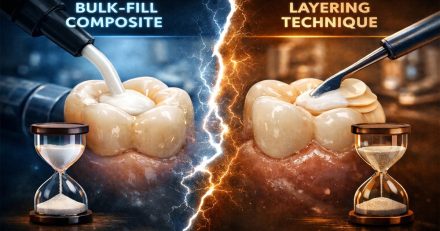
Introduction In modern restorative dentistry, the posterior composite is a staple of daily practice. For decades, the Incremental Layering Technique was the undisputed gold standard for managing polymerization shrinkage. However, the rise of Bulk-Fill Composites has challenged this tradition, promising to simplify workflows and save precious chair time. The critical question for every clinician is: Does the speed of bulk-filling compromise […]
IntroductionIn a small dental practice, the stakes for infection control are just as high as in a major hospital. Sterilization is the foundation of patient safety, staff protection, and strict legal compliance. However, efficiency is often the secondary challenge; in a limited space with a small team, a clunky protocol can bottleneck your entire daily […]
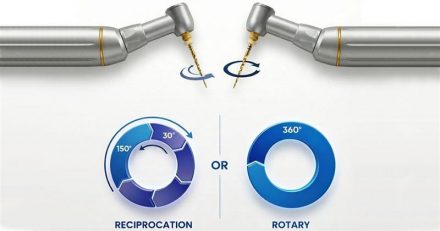
Endodontic shaping has transitioned from the use of rigid stainless steel hand files to flexible nickel-titanium (NiTi) instruments capable of conforming to complex root canal anatomy. Modern NiTi files utilize either continuous rotation or reciprocating motion. The choice between this kinematics directly impacts clinical efficiency, instrument longevity, and the overall quality of the canal preparation. Understanding the Mechanisms of Motion Continuous Rotary Motion Continuous rotary motion […]
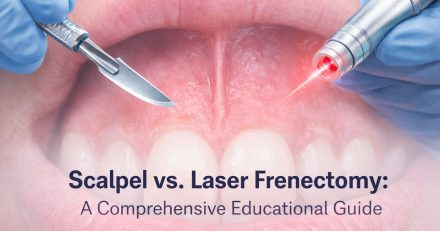
Frenectomy- the surgical removal or repositioning of restrictive oral frenum-are performed across all ages to improve speech, oral hygiene and orthodontic stability. For decades the standard method has been a simple scalpel excision with sutures. Over the last two decades, however, various surgical lasers have been introduced for soft tissue procedures. Clinicians therefore face a practical question: when is a laser the […]
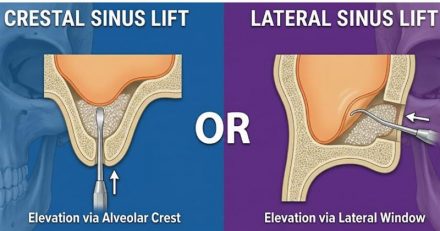
Introduction Loss of maxillary premolars and molars often leads to pneumatization of the sinus and resorption of the alveolar ridge. When implant therapy is planned in these sites, the surgeon must decide how to increase the available bone height safely and predictably. Two broad approaches are used to elevate the sinus floor: the lateral (open) sinus […]
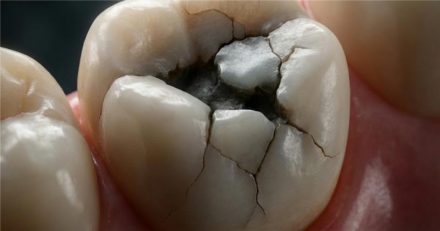
Composite restorations remain the most common direct treatment in dentistry-yet they are also among the most technique-sensitive. Composite Failures often occur not because of the material but due to small deviations in bonding, moisture control, preparation design, or occlusal planning. Understanding these hidden factors helps clinicians achieve predictable, long-lasting restorations. Why Composite Restorations Fail 1. […]
Modern dental care is shifting from purely clinical outcomes to a broader approach that includes environmental responsibility. Green dentistry focuses on reducing waste, conserving resources, using safer materials, and minimizing environmental toxins – all while maintaining excellent patient care.Being eco-conscious is more than an ethical step; it improves efficiency, reduces long-term costs, and strengthens the […]
Chairside CAD/CAM systems have reshaped restorative dentistry by combining digital scanning, computer-aided design, and in-office fabrication into one continuous workflow. Same-day crowns and indirect restorations produced through these systems reduce clinical time, eliminate temporaries, and improve overall predictability. Modern CAD/CAM workflows offer a higher degree of control over restorative quality, accuracy, and material performance than […]
Achieving a beautiful, naturallooking restoration isn’t just about using the best materials-it begins with accurately matching the shade of the patient’s teeth. Shade matching is the process of selecting a restoration colour that harmonizes with the surrounding dentition. A mismatch can undermine the aesthetic outcome and patient satisfaction. Successful shade matching requires understanding colour science […]