
Fiber vs. Metal Posts: Guide to Choosing the Right Post & Core
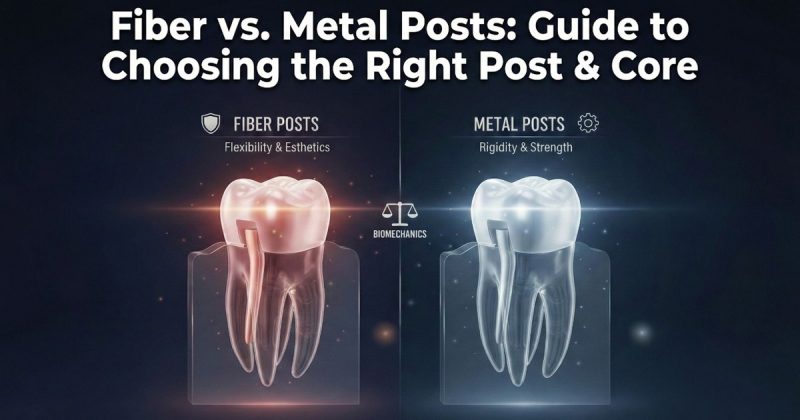
In the era of biomimetic dentistry, the choice of post and core materials remains a point of contention for many clinicians. While the shift toward adhesive protocols has favoured fiber, the mechanical “strength” of metal still holds appeal in certain clinical scenarios.
The primary objective of any post-endodontic restoration is not just to replace missing structure, but to optimize tooth longevity by protecting the remaining dentin. This guide explores the biomechanical nuances and clinical decision-making required to choose the right post for the right case.
1. The Role of Posts: Retention vs. Reinforcement
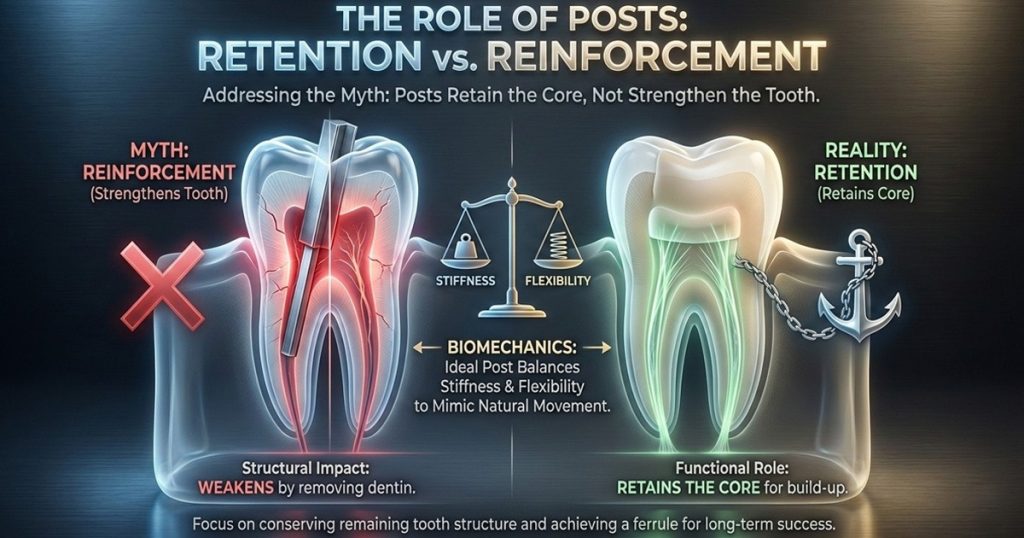
One of the most persistent myths in restorative dentistry is that a post “strengthens” a root-filled tooth. In reality, a post’s primary function is structural retention-providing a foundation for the core build-up when there is insufficient tooth structure.
- Functional Role: Retaining the core.
- Structural Impact: A post actually weakens the tooth by requiring the removal of internal radicular dentin.
- Biomechanics: The ideal post should balance stiffness (to support the core) with flexibility (to mimic the natural movement of the tooth under load).
2. Fiber Posts vs. Metal Posts: Key Biomechanical Differences
The choice between these two materials often comes down to how they handle stress distribution within the root canal.
| Feature | Fiber Posts (FRC) | Metal Posts (Stainless Steel/Titanium/Cast) |
| Modulus of Elasticity | Close to natural dentin (~20 GPa). | Significantly higher than dentin (~100–200 GPa). |
| Stress Distribution | Dissipates stress along the root, reducing fracture risk. | Concentrates stress at the apex or stiff points. |
| Failure Mode | Often “repairable” (post debonding or core fracture). | Often “catastrophic” (vertical root fracture). |
| Esthetics | Excellent; ideal for all-ceramic crowns. | Can cause a grayish “shadow” through thin gingiva or ceramic. |
Products:
Fiber Post – Waldent Radiopaque Composite Fiber Post Kit
Metal Post – EndoKing Dental Conical Screw Posts (Pack of 240)
3. Case-Based Selection Considerations
Residual Tooth Structure & The Ferrule Effect
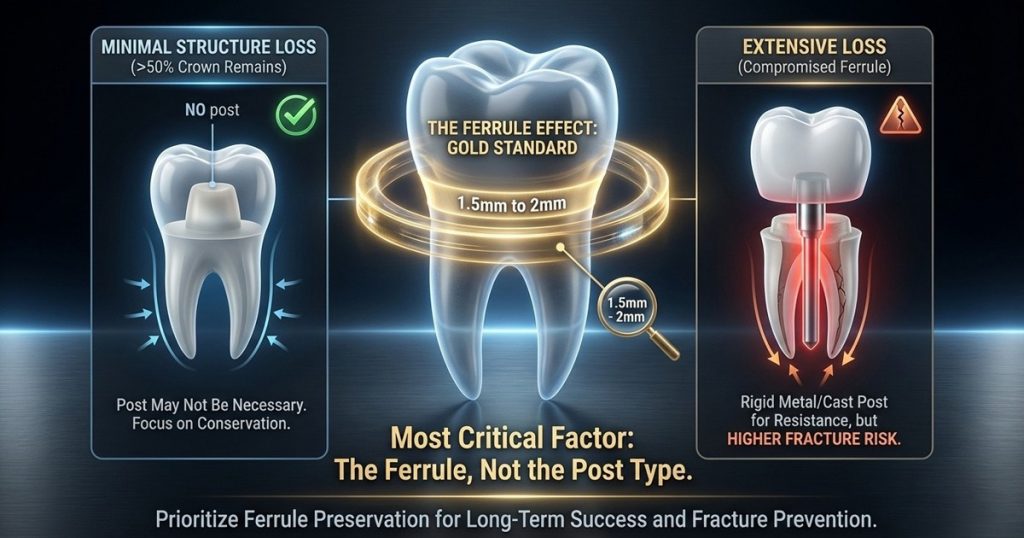
The most critical factor in success is not the post type, but the ferrule. A 1.5mm to 2mm circumferential ring of sound dentin is the “gold standard” for preventing root fracture.
- Minimal Structure Loss: If >50% of the clinical crown remains, a post may not be necessary at all.
- Extensive Loss: If the ferrule is compromised, a rigid metal post or a custom-cast post may provide better resistance to lateral forces, though at a higher risk of root fracture.
Root Anatomy
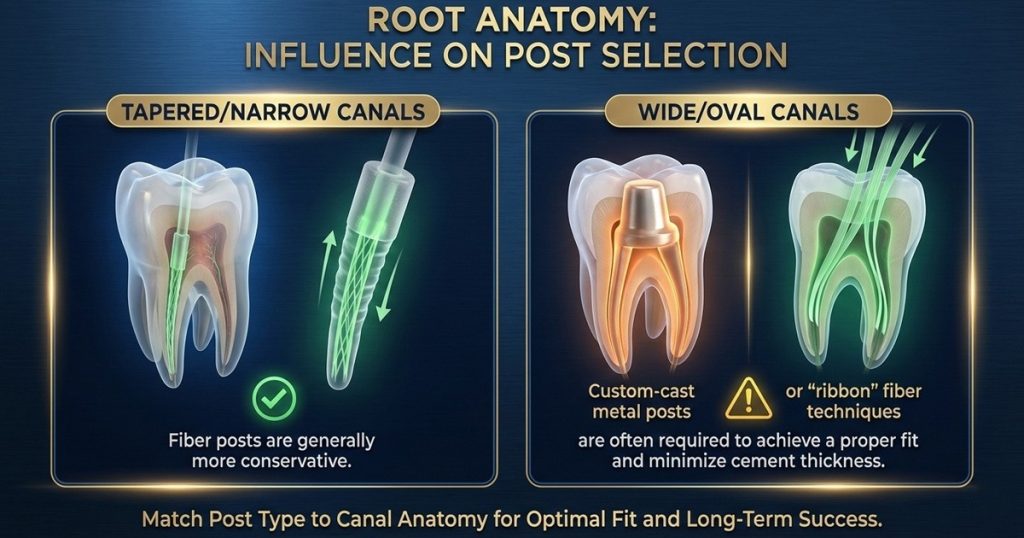
- Tapered/Narrow Canals: Fiber posts are generally more conservative.
- Wide/Oval Canals: Custom-cast metal posts or “ribbon” fiber techniques are often required to achieve a proper fit and minimize cement thickness.
Functional Loading
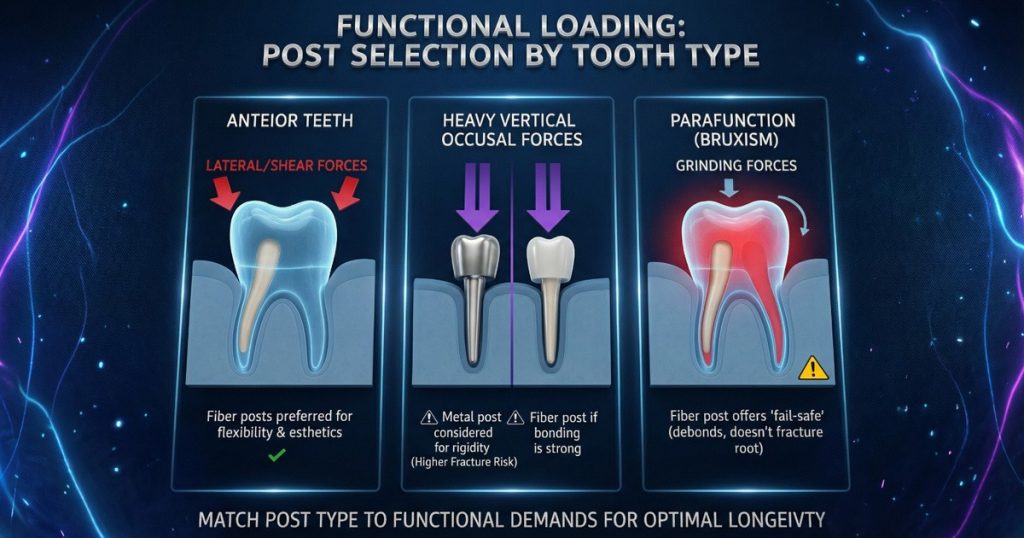
- Anterior Teeth: Primarily subject to lateral/shear forces. Fiber posts are preferred for their flexibility and esthetics.
- Posterior Teeth: Subject to heavy vertical occlusal forces. If significant structure is lost, the rigidity of a metal post might be considered, though fiber remains a strong contender if bonding is possible.
- Parafunction (Bruxism): Patients with heavy grinding require maximum structural preservation; fiber posts may offer a “fail-safe” by debonding rather than fracturing the root.
4. Technical Nuances of Post Placement
Success is often more about the post and core technique than the material itself.

5. Red Flags and Pitfalls to Avoid
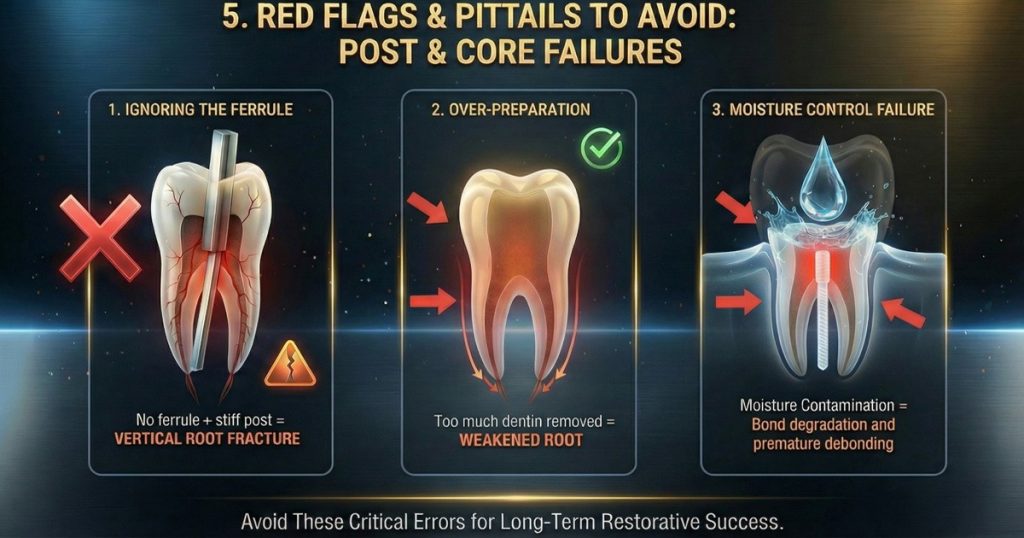
- Ignoring the Ferrule: Attempting to “save” a tooth with no ferrule by using a long, stiff post is a recipe for vertical root fracture.
- Over-preparation: Removing too much radicular dentin to fit a specific post size weakens the root’s structural integrity.
- Moisture Control: Failure to use a rubber dam during fiber post cementation leads to bond degradation and premature debonding.
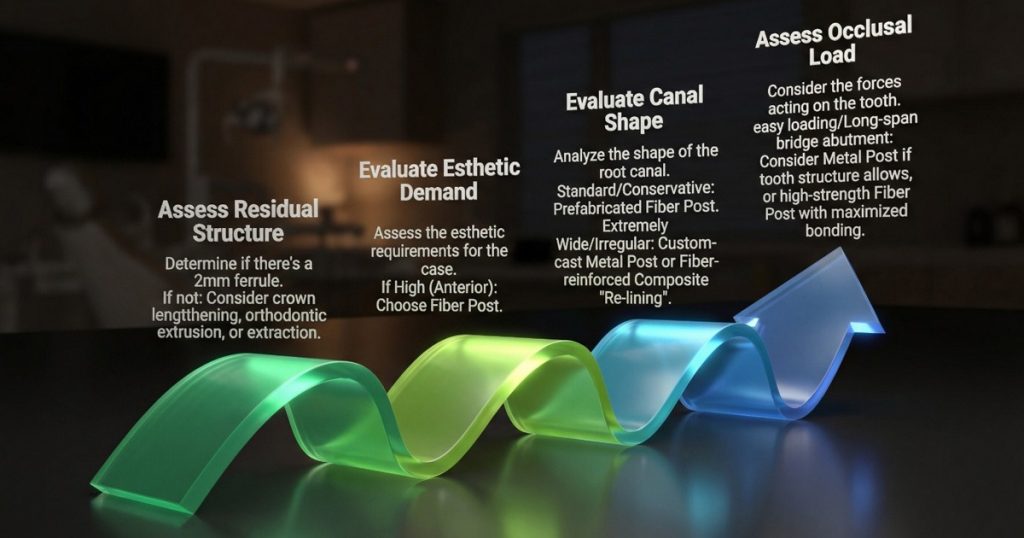
6. Practical Decision-Making Flow
Use this stepwise approach for your next post-endodontic case:
Conclusion
The transition from metal to fiber represents a shift from “mechanical retention” to “biomimetic integration.” While metal posts still have a niche in specific high-load or irregular-anatomy cases, fiber posts offer a safer, more esthetic, and tooth-friendly alternative for the majority of modern restorations.
The key is not to find a “one size fits all” post, but to respect the remaining tooth structure and the principles of the ferrule effect.
FAQ’s
Fiber posts have a modulus of elasticity close to dentin, allowing better stress distribution along the root. This reduces fracture risk and mimics natural tooth biomechanics more closely than rigid metal posts.
The ferrule is more critical than post type. A 1.5–2 mm circumferential ferrule of sound dentin is the most important factor for preventing root fracture and ensuring long-term restoration success.
Fiber posts usually show repairable failures like debonding or core fracture, whereas metal posts are more associated with catastrophic failures such as vertical root fractures.
Fiber posts rely on adhesive bonding. Poor isolation or moisture contamination compromises bond strength, leading to early debonding and restoration failure, even if the post selection is ideal.


No Comment