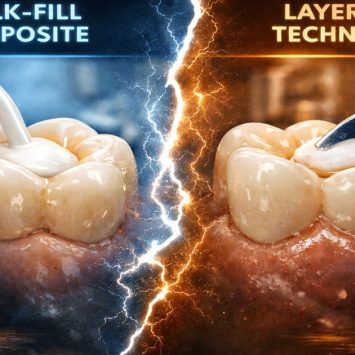
Composite restorations remain the most common direct treatment in dentistry-yet they are also among the most technique-sensitive. Composite Failures often occur not because of the material but due to small deviations in bonding, moisture control, preparation design, or occlusal planning. Understanding these hidden factors helps clinicians achieve predictable, long-lasting restorations. Why Composite Restorations Fail 1. […]
Digital dentistry has transformed the way clinicians diagnose, plan, and deliver treatments, and Intraoral Scanners are at the heart of…
We crunch the numbers on the “Digital Dentistry” hype to see if the switch is finally worth the hassle for…
If you’re a Dental Student, or a clinic owner, you already know how time-consuming inventory management can be. Between patient…
Tooth sensitivity—also known as dentin hypersensitivity—is a common problem where teeth experience sharp pain when exposed to certain triggers like…
Modern dental care is shifting from purely clinical outcomes to a broader approach that includes environmental responsibility. Green dentistry focuses…
Just like building your clinical skills, the right professional connection is equally important. For Dental Students, having a good mentor…
Local anesthesia is one of the main reasons due to which modern dental treatment feels comfortable and pain free. Behind…
Chairside CAD/CAM systems have reshaped restorative dentistry by combining digital scanning, computer-aided design, and in-office fabrication into one continuous workflow.…
Introduction Periodontal disease continues to be one of the most common conditions that come across many dentists. Many patients respond…